
Echoes of Silence: The Unseen Pain of Pregnancy Loss
- Klages Therapy
- Aug 9
- 6 min read

Updated: Aug 24
The Voice of Those Who Feel and Those Who Care
Keywords: angel mothers, pregnancy loss, miscarriage, pregnancy loss grief, perinatal loss
I know the sound of the silence that remains after a loss. I know the weight of an emptiness that cannot be measured by weeks of gestation. I write this article not only as a professional who studies the human psyche, but as a woman who has crossed the desert of pregnancy loss three times. I understand your pain because it is also my own. And it is from this place of deep empathy and clinical grounding that we must talk about what society insists on silencing.
.
The Fallacy of the Clock: Why Grief Cannot Be Measured in Weeks
The science of attachment, founded by John Bowlby, shows us that the emotional bond begins long before birth. The moment a child is planned or discovered, the parents' brain begins a neurobiological reorganization.
Clinical Evidence: Studies indicate that the intensity of grief is not correlated with the gestational age, but rather with the degree of emotional investment and the meaning of that life to the parents.
Disenfranchised Grief: When those around us say "you'll get pregnant again soon" or "it was only for a short time", what occurs is known as disenfranchised grief (unrecognized grief). This isolates the couple and hinders a healthy mourning
process, increasing the risks of chronic anxiety and depression.
.
The Neurobiology of Loss: What Happens in the Body and the Brain
Beyond psychological pain, pregnancy loss is a profound biological shock. From the earliest weeks of gestation, the female body undergoes a silent, rapid neuroendocrine revolution. When a loss occurs, the body is forced to abruptly halt a process that was already in full transformation.
The Hormonal "Abyss" and the Drop in Neurotransmitters: During pregnancy, levels of progesterone, estrogen, and beta-hCG rise dramatically. With the interruption of the pregnancy, these levels plummet sharply. Because estrogen and progesterone directly modulate receptors for serotonin (emotional stability) and GABA (calm and anxiety modulation), this sudden drop triggers a chemical state of exhaustion, hypervigilance, despair, and mood dysregulation.
Neuroplasticity and Brain Reorganization: Neuroscience demonstrates that pregnancy triggers synaptic pruning and reshapes areas linked to empathy and protection (such as the amygdala and prefrontal cortex). The female brain biologically prepares to care for and nurture life. Pregnancy loss leaves these neural pathways active but suddenly deprived of their attachment figure—a state scientific literature describes as a "biological void."
The Stress Axis (HPA) and Physical Trauma: The shock of the loss triggers chronic activation of the Hypothalamic-Pituitary-Adrenal (HPA) axis, flooding the body with cortisol and adrenaline. This manifests as physical pain, severe insomnia, extreme fatigue, heart palpitations, and digestive issues. The body responds to grief with the same neurophysiological intensity as a post-traumatic stress response.
Cellular Memory and the Phenomenon of Microchimerism: Studies indicate that early in pregnancy, fetal cells cross the placenta and integrate into maternal tissues (such as the heart, lungs, and brain). This cellular connection reinforces that motherhood is physically inscribed into a woman's body regardless of gestational age—validating that this life became a physical part of her very existence.

Understanding neurobiology lifts the burden of self-blame: When we recognize the neurochemical storm and physical rewiring taking place, it becomes evident that overwhelming tears, exhaustion, and grief are not "weakness," but the genuine physiological response of a body in shock and undergoing biological mourning.
Beyond the biological impact and physical pain, the loneliest territory of pregnancy loss is the emotional labyrinth where guilt takes hold. Almost instantly, the mother’s mind enters an exhaustive search for answers, silently repeating a painful question: "What did I do wrong?
The loss triggers a devastating sense of helplessness. A woman revisits every step, every meal, every physical exertion, and every thought in an attempt to find a reason,as though it had somehow been in her hands to foresee or prevent the loss of her child. When those around her try to offer comfort with clumsy questions or remarks, the burden often multiplies; every conversation seems to reinforce the unjust idea that her body failed or that she was not enough to sustain that dream.
This profound sadness stems not only from the baby's physical absence, but from the disruption of the protective role the mother had already assumed in her heart. Naming and holding space for this pain is essential to dismantling the guilt: pregnancy loss is not a mother’s failure. It is an event entirely outside of her control, and embracing this truth is the first step toward allowing guilt to give way to compassion and respect for her own story.

The Father: Grief in the Shadows
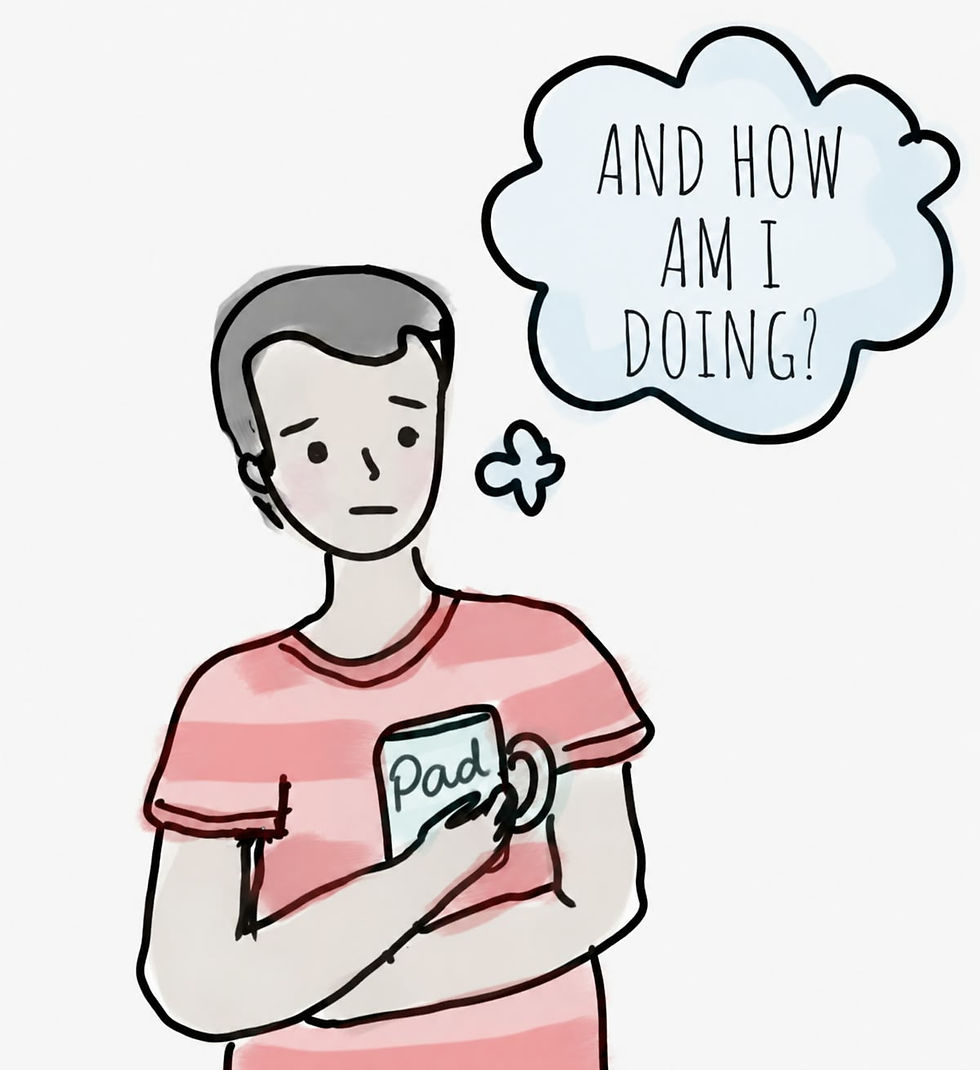
We need to break away from the image of the father as the "unshakable pillar." Culturally, men are placed as secondary figures in their own loss.
The Stress of the "Pillar": While attention is focused on the mother’s physical recovery, the father often neglects his own emotional state to "be strong." This creates a delayed and lonely mourning process.
Validation: Father, your pain is no less valid simply because you did not carry the baby in your womb. You carried them in your plans, in your love, and in the identity you were building. You lost a child, too.
. The Impact on Couple Dynamics
The loss of a child is one of the most stressful events a relationship can face. Science indicates that couples who experience pregnancy loss have a significantly higher risk of separation in the following years.
Rhythms of Grief: Everyone processes pain differently. One partner may want to speak endlessly, while the other seeks isolation. Without therapeutic mediation and mutual understanding, these differing rhythms can be misinterpreted as a "lack of love" or "indifference," creating insurmountable chasms.
The Disruption of Intimacy: Sex and physical affection can become traumatic triggers, associated either with the loss or with the pressure of trying again, which destabilizes the couple's sense of pleasure and safe haven.
. The Role and Challenges of the Family Support Network
Pregnancy loss does not affect only the parents; it echoes throughout the entire family structure. However, due to a lack of emotional literacy and social discomfort with grief, the support network often makes mistakes while trying to comfort.
Silence and Unintentionally Hurtful Phrases: Well-meaning family members often turn to clichés like "God knows what He is doing" or "You are still young." Although intended to ease the pain, these phrases invalidate the present suffering.
Genuine Support: Effective family support does not require ready-made answers or magic advice, but rather presence and active listening. Allowing parents to talk about the baby, cry without judgment, and feel their pain is the greatest act of love a family can offer.
My Process of Reconstruction: From Pain to Transformation
Speaking about pregnancy loss is not merely a professional choice for me; it is a mission carved into my own skin. Going through three pregnancy losses was one of the deepest challenges of my journey. The emotional and physical impact of seeing a dream interrupted three consecutive times shook me to my core.
Seeking Help and Rebuilding: Facing the abyss of pain, I realized I could not cross that desert alone. It was through therapeutic support that I found a safe space to cry, process the trauma, and pick up my pieces. Therapy did not erase my history, but it gave me the tools to rebuild myself on new foundations.
Pain That Does Not Vanish, But Transforms: Today, I know that grief is not a place where you live, but a process you pass through. We never forget the memories, the feelings, and the love for each of those lives remain intact. However, I learned to give new meaning to that pain. Suffering gave way to a respectful memory and an even greater empathy for every woman and couple who enters my practice.

Offering Support: The Path to Integration
As a therapist, what I propose is not to "forget," but to integrate the loss into one's life story.
Create Rituations: Give the baby a name, write a letter, or plant a tree. Rituals help the brain process the reality of loss.
Nonviolent Communication: Express your needs without blaming your partner. Use statements such as (I feel lonely when you don't talk about it), instead of (You don't care.)
Seek Specialized Help: Integrative therapy looks at the whole person, welcoming both the body that suffered the loss and the soul that mourns the interrupted dream.
Letter for my Baby

The pain of pregnancy and neonatal loss is real, legitimate, and deserving of respect. If you are going through this right now, know that you do not have to carry this weight alone.
There is a path through compassion, validation, and, above all, the love that endures ,because love does not die with physical departure.
By Jana Klages
angel mothers, pregnancy loss,miscarriage,pregnancy loss grief,


Comments